
Design & Contracting
HVAC Controls & Safety Systems
Sensors, controllers and safety interlocks that keep HVAC efficient and safe.
- Service
- Design & Contracting
- Key point 01
- Sensors · controllers
- Key point 02
- AHU fire interlocks
- Key point 03
- BMS integration
Chapter 01 / 03
Parts of an HVAC control system
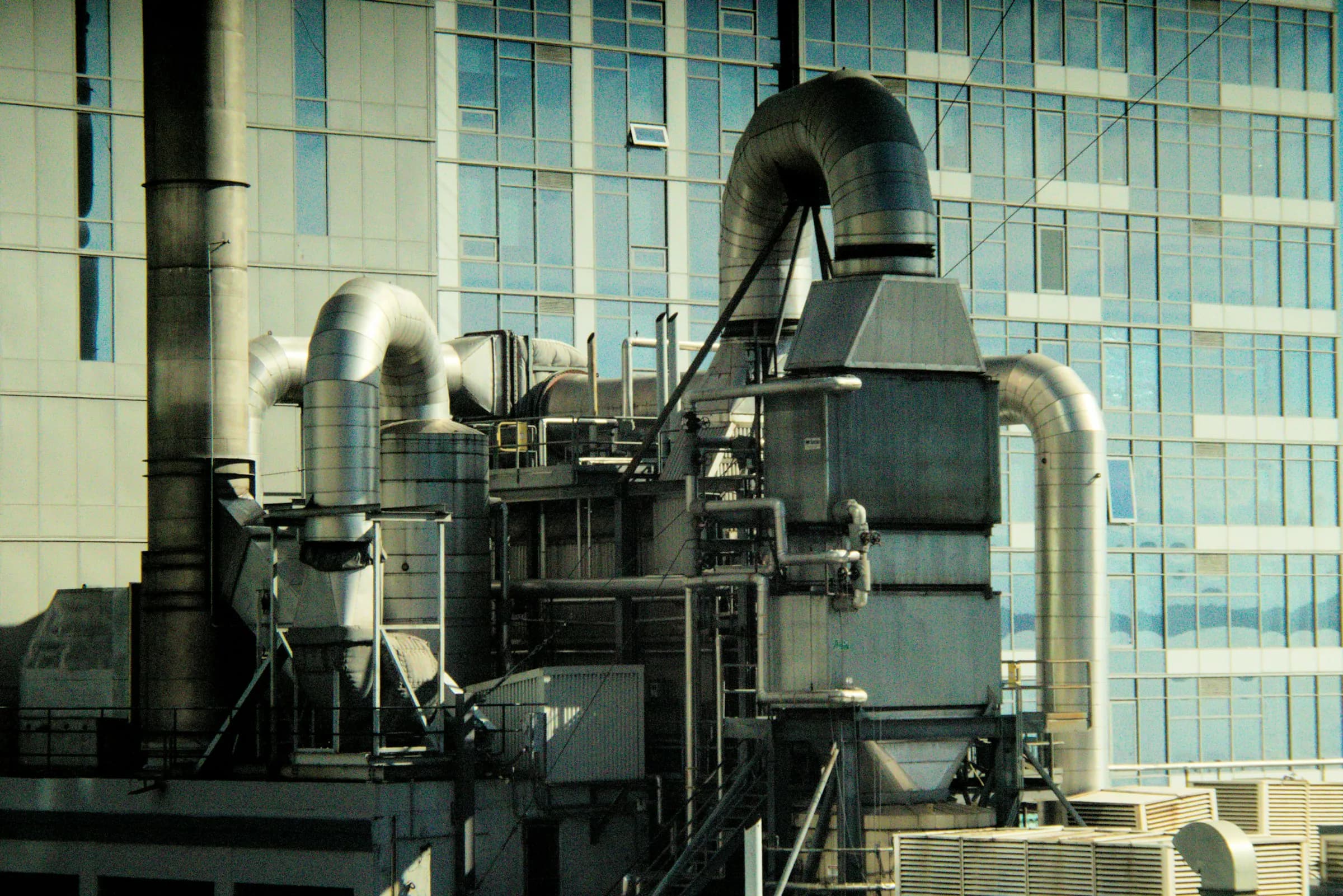
Controls decide how hard the HVAC works and when. A simple home thermostat is a control system. So is a building automation system running a hospital. Both use the same three parts. The difference is in how many points are measured and how much the controller can do with them.
01Sensors
Measure temperature, humidity, pressure and occupancy, and report them to the controller.
02Controller
Compares readings with setpoints and decides what the equipment should do.
03Actuators
Dampers, valves and variable frequency drives that carry out the controller's commands.
Chapter 02 / 03
What good controls and safety give you
Well-set controls hold temperature and humidity accurately and cut energy wasted on empty or over-cooled spaces. Safety systems watch the equipment continuously and act when something goes wrong. Together they lower running costs and reduce the risk to people and property when equipment fails.
01Energy savings
Equipment runs only as hard as the load requires.
02Fault detection
Early warnings before a fault turns into a costly breakdown.
03Occupant safety
Emergency shutdown and interlocks reduce risk during failures.
04Gas leak detection
Early detection where fuel-fired equipment is used.
05Building integration
HVAC responds together with fire and security systems.
Chapter 03 / 03
The AHU's role in fire safety
An air handling unit moves air through the whole building, so in a fire it can either spread smoke or help contain it. Fire safety design makes sure it does the second. These functions are set up during installation and must be tested regularly, as building codes require.
01Smoke control
AHUs stop or redirect airflow to keep smoke in the affected zone.
02Pressurisation
Stairwells and escape routes kept at higher pressure so smoke stays out.
03Fire dampers
Dampers in ducts close automatically to stop fire spreading through ductwork.
04Shutdown on alarm
AHUs switch off or change mode when the fire alarm triggers.
05BMS integration
Coordinated response across AHUs, dampers and pressurisation fans.
How it works
Where we use it

Available in Mumbai and nearby
- Controls & Safety in Mumbai
- Controls & Safety in Navi Mumbai
- Controls & Safety in Thane
- Controls & Safety in Vasai
- Controls & Safety in Virar
- Controls & Safety in Palghar
- Controls & Safety in Kalyan
- Controls & Safety in Khopoli
- Controls & Safety in Lonavala
- Controls & Safety in Nashik
- Controls & Safety in Pune
Frequently asked questions
01What does an HVAC control system do?
It reads conditions through sensors, compares them with setpoints in a controller, and adjusts fans, valves and compressors through actuators so the space stays at the right temperature and humidity with the least energy.
02Why should the AHU be linked to the fire alarm?
Without that link, an AHU can keep pushing air and spread smoke through the ducts. An interlock shuts it down or changes its mode, and closes fire dampers, when the alarm triggers.
03Can you integrate our HVAC with an existing BMS?
In most cases, yes. We check what protocols the BMS and the HVAC equipment support and plan the integration from there.
04Do VFDs save energy on AHUs and pumps?
A variable frequency drive lets a fan or pump run slower when full output is not needed. On equipment that runs long hours at part load, this usually reduces power use noticeably.
Next service
Heating Services.
Get a free quote
Tell us about your site.
Share the space, the tonnage if you know it, and your timeline. An engineer will call you back, visit if needed, and send a clear quote with equipment options.