
Installation
VRV / VRF System Installation
One outdoor system, many indoor units, each zone set to its own temperature.
- Service
- Installation
- Key point 01
- Heat pump & recovery
- Key point 02
- Cassette · ducted
- Key point 03
- Daikin · Blue Star
Chapter 01 / 04
What a VRV or VRF system is
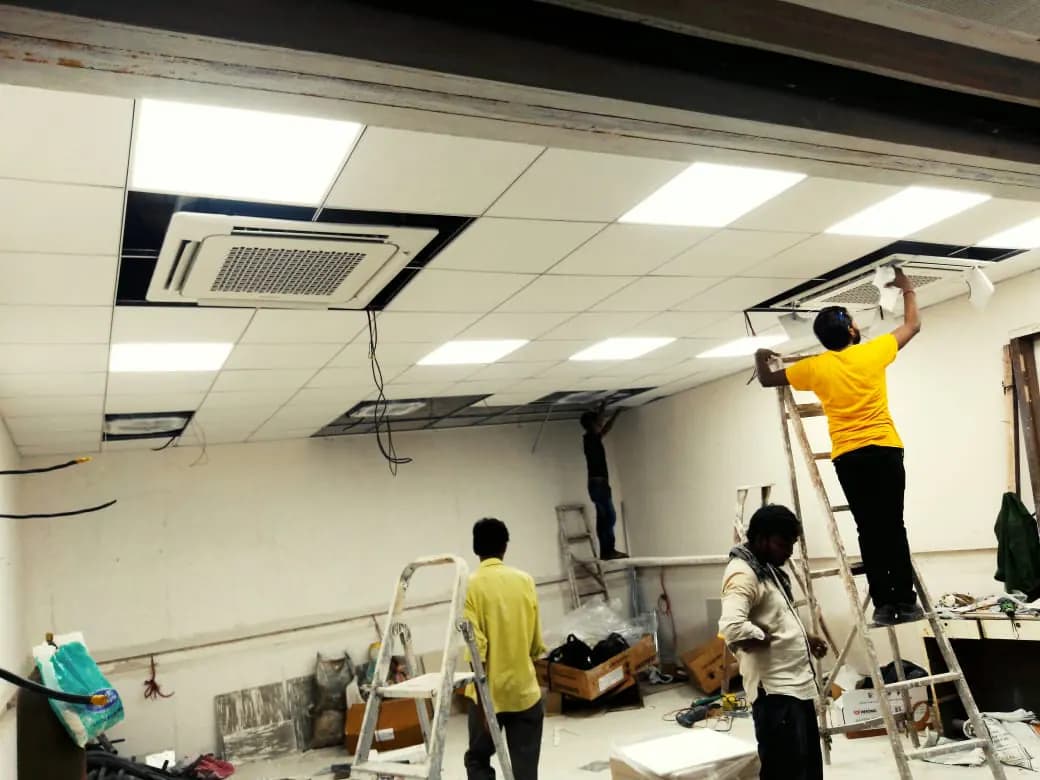
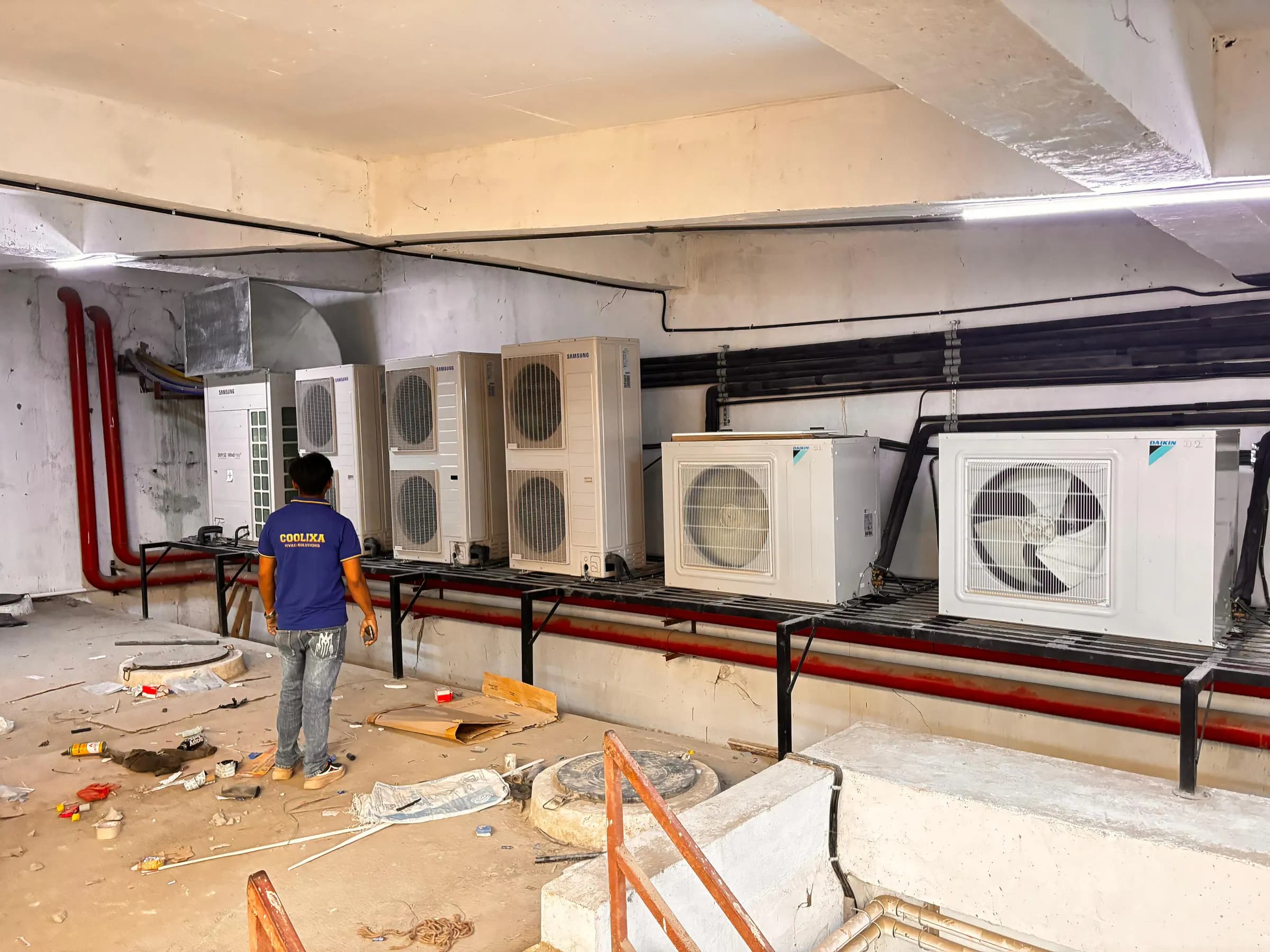
VRF stands for variable refrigerant flow. One outdoor unit, or a bank of them, feeds refrigerant to several indoor units through copper piping. A variable-speed compressor sends only as much refrigerant as each zone needs, so a cabin running at 24°C and a meeting room at 22°C are served by the same system.
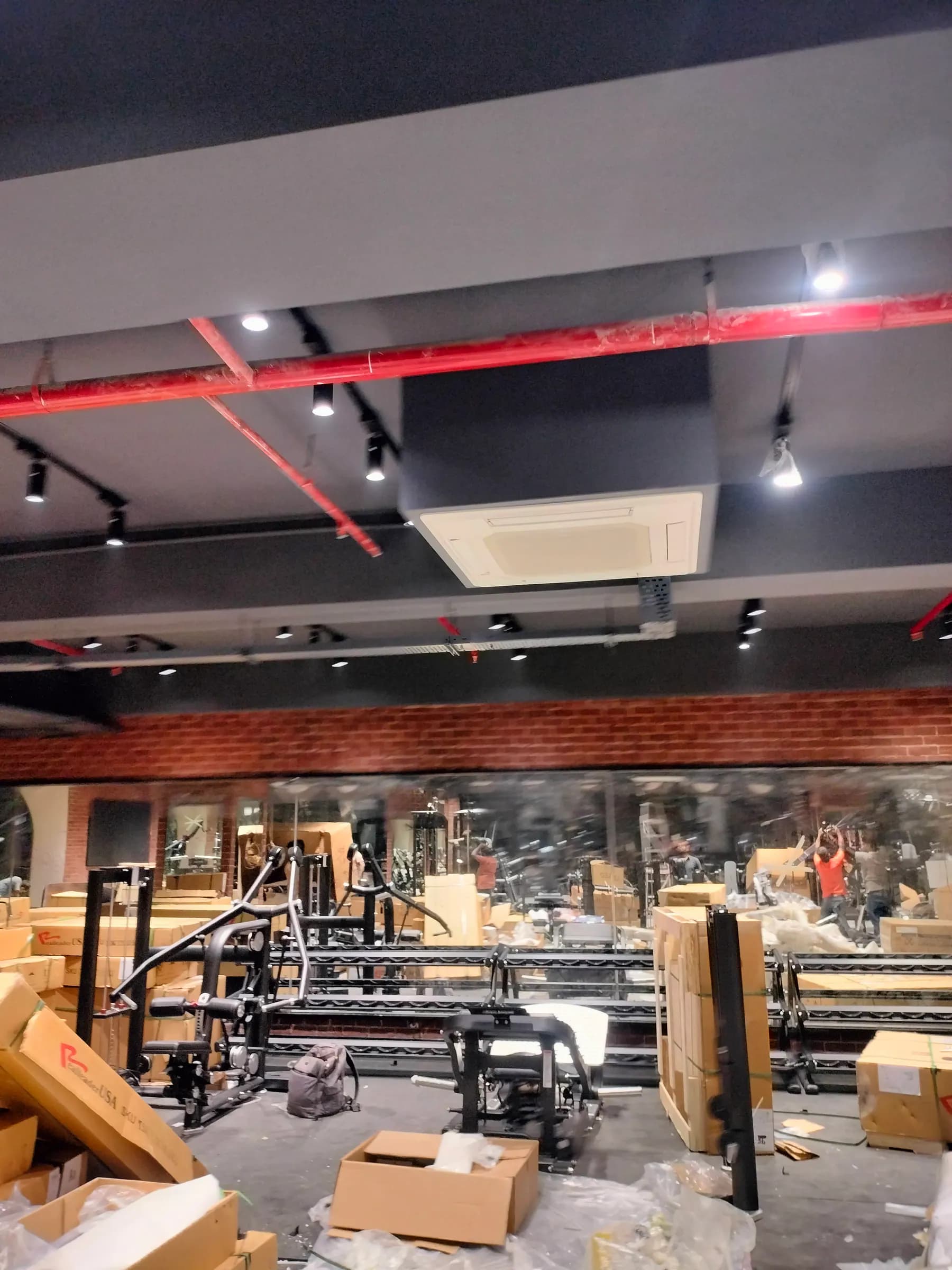
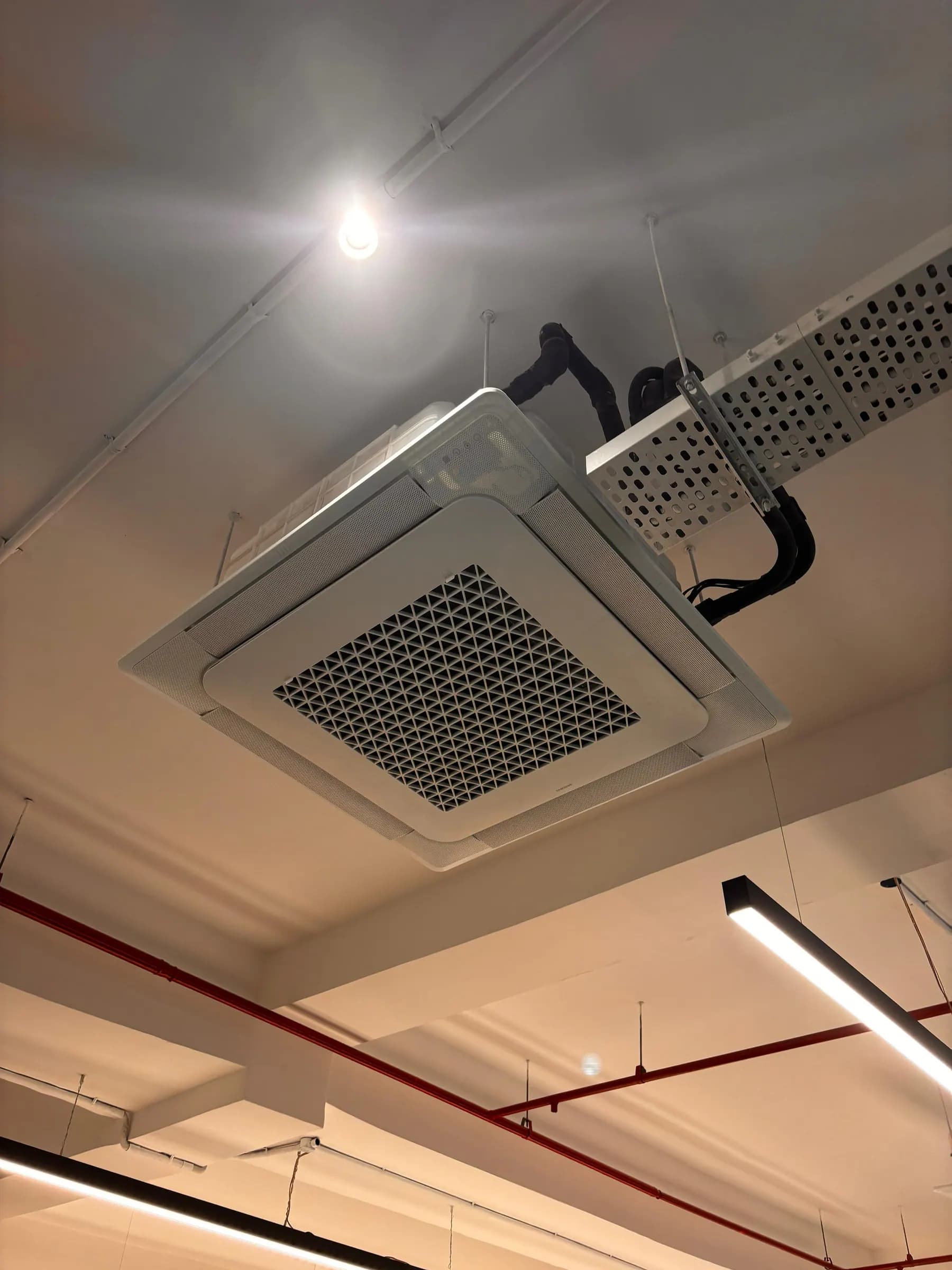
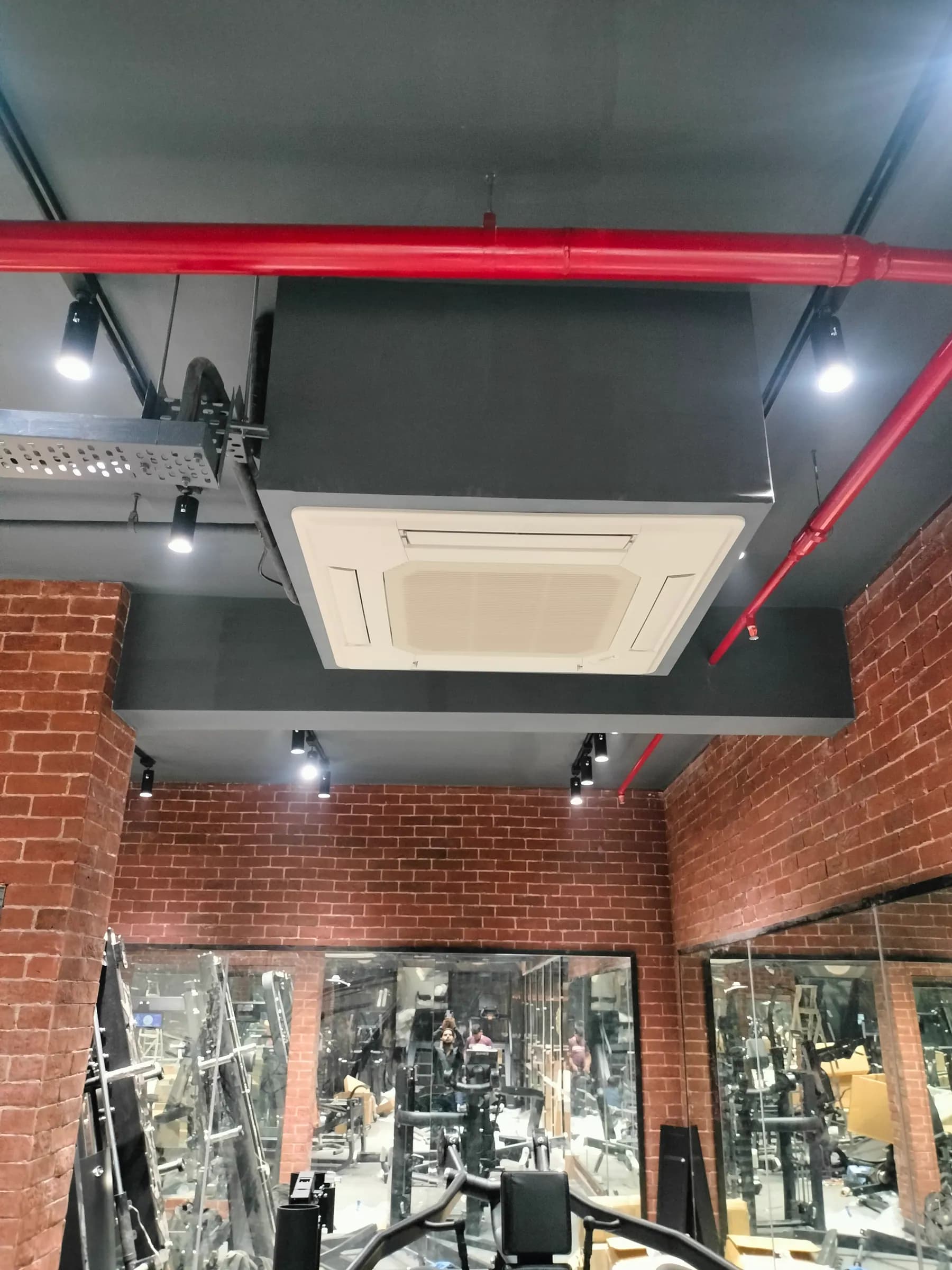
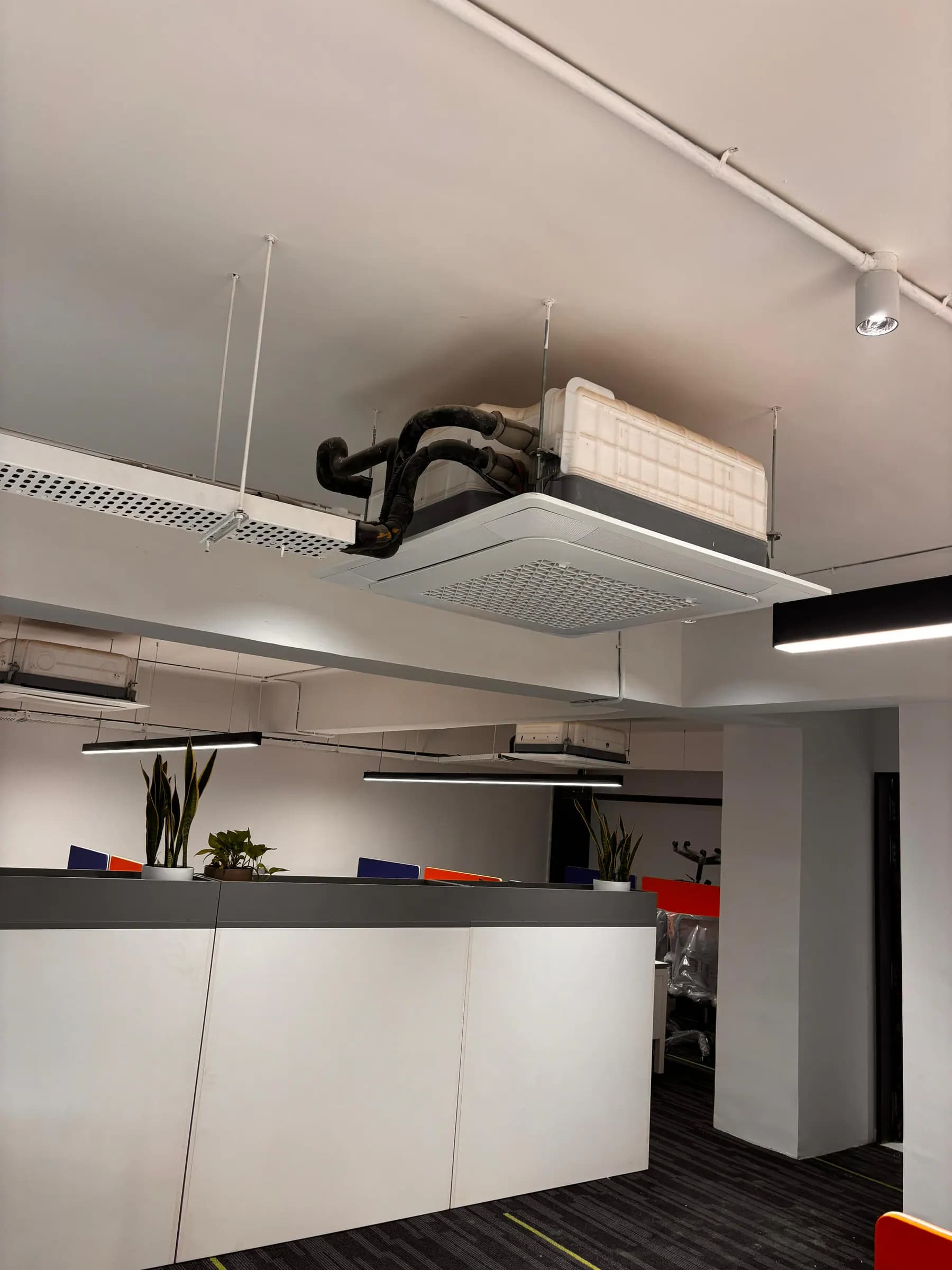
VRV, variable refrigerant volume, is the name Daikin uses for its own VRF range. The two terms describe the same technology. Indoor units can be wall-mounted, ceiling cassettes or concealed ducted units, mixed to suit each room. Blue Star, Mitsubishi Heavy Industries and Samsung sell the same type of system under their own names.
Chapter 02 / 04
Why buildings choose VRF
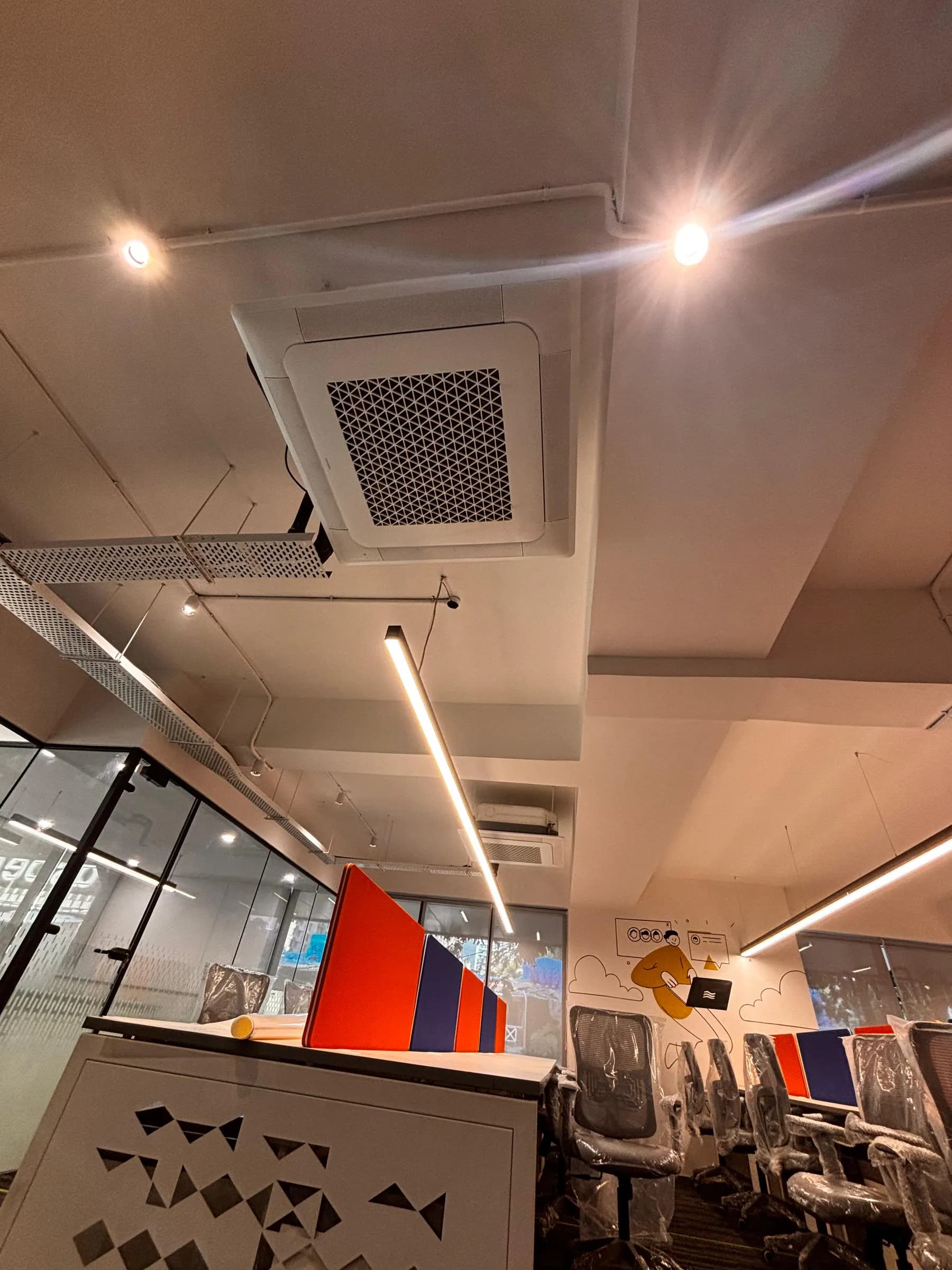
VRF suits buildings where different areas are used at different times. Each zone is controlled on its own, so empty rooms are not cooled. It needs far less ductwork than a central ducted plant, which matters in Mumbai offices and flats with low false ceilings. The outdoor units take up little space and can sit on a terrace or a service ledge.
01Zone control
Each indoor unit has its own setpoint and can be switched off independently.
02Lower running cost
Inverter compressors match output to the actual load instead of cycling on and off.
03Less ductwork
Refrigerant piping replaces large ducts, which keeps ceiling heights usable.
04Quiet indoors
The compressor sits outside, so indoor units run with little noise.
05Flexible layouts
Indoor units can be added or moved as the floor plan changes.
Chapter 03 / 04
Types of VRF systems we install
The right type depends on the building, the available outdoor space and whether any area needs heating. We recommend a configuration after the site survey, not before. Most Mumbai offices and homes need cooling only, so heat pump VRF is the usual choice. Heat recovery and water-cooled systems suit specific buildings.
01Heat pump VRF
All zones cool together, or all heat together. The common choice for offices and homes.
02Heat recovery VRF
Some zones cool while others heat, reusing heat moved out of one area.
03Water-cooled VRF
Uses water instead of outdoor air to reject heat. Useful in high-rises with little outdoor space.
04Mini VRF
A single outdoor unit serving a few indoor units, for small offices, clinics and large flats.
Chapter 04 / 04
Keeping a VRF system healthy
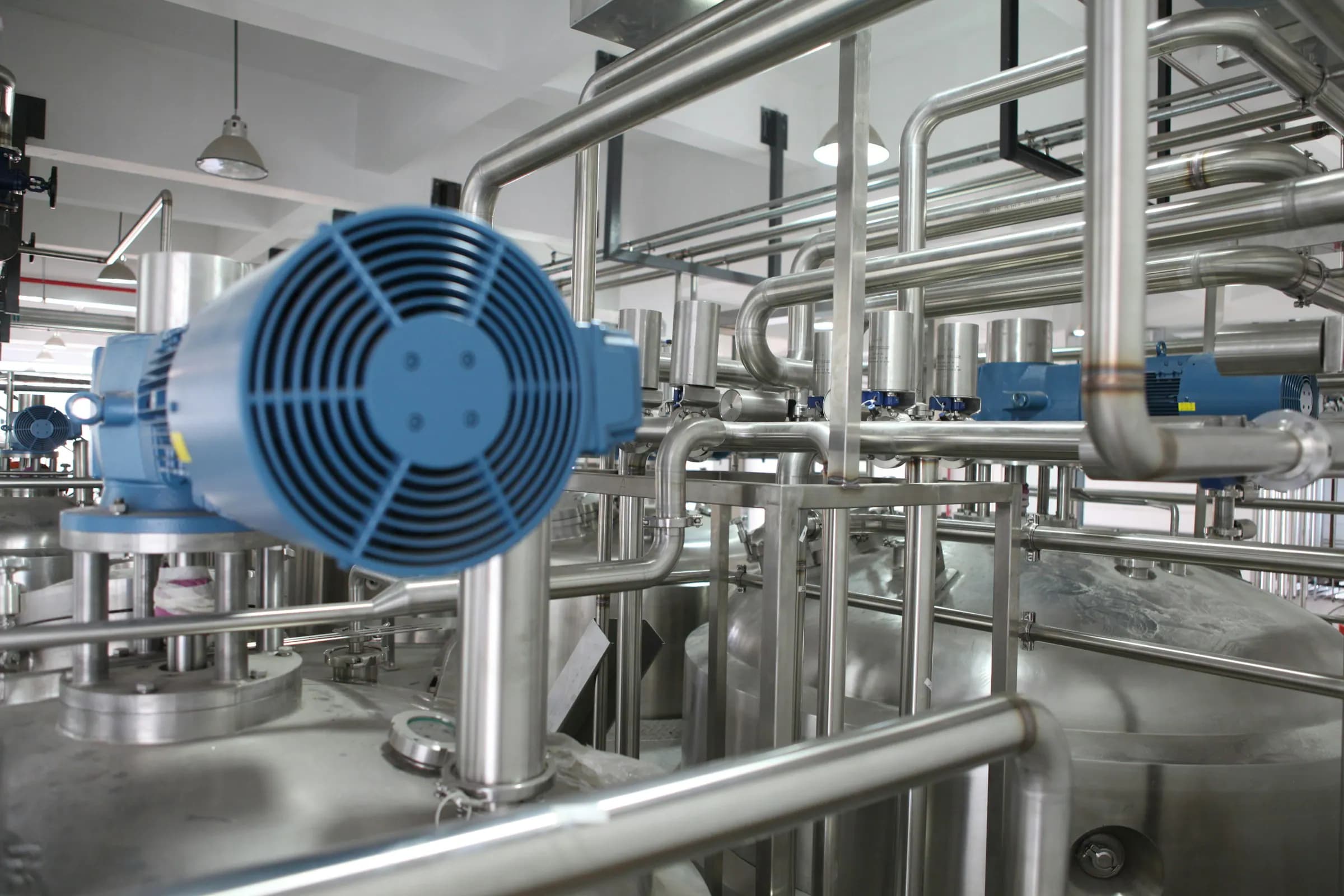
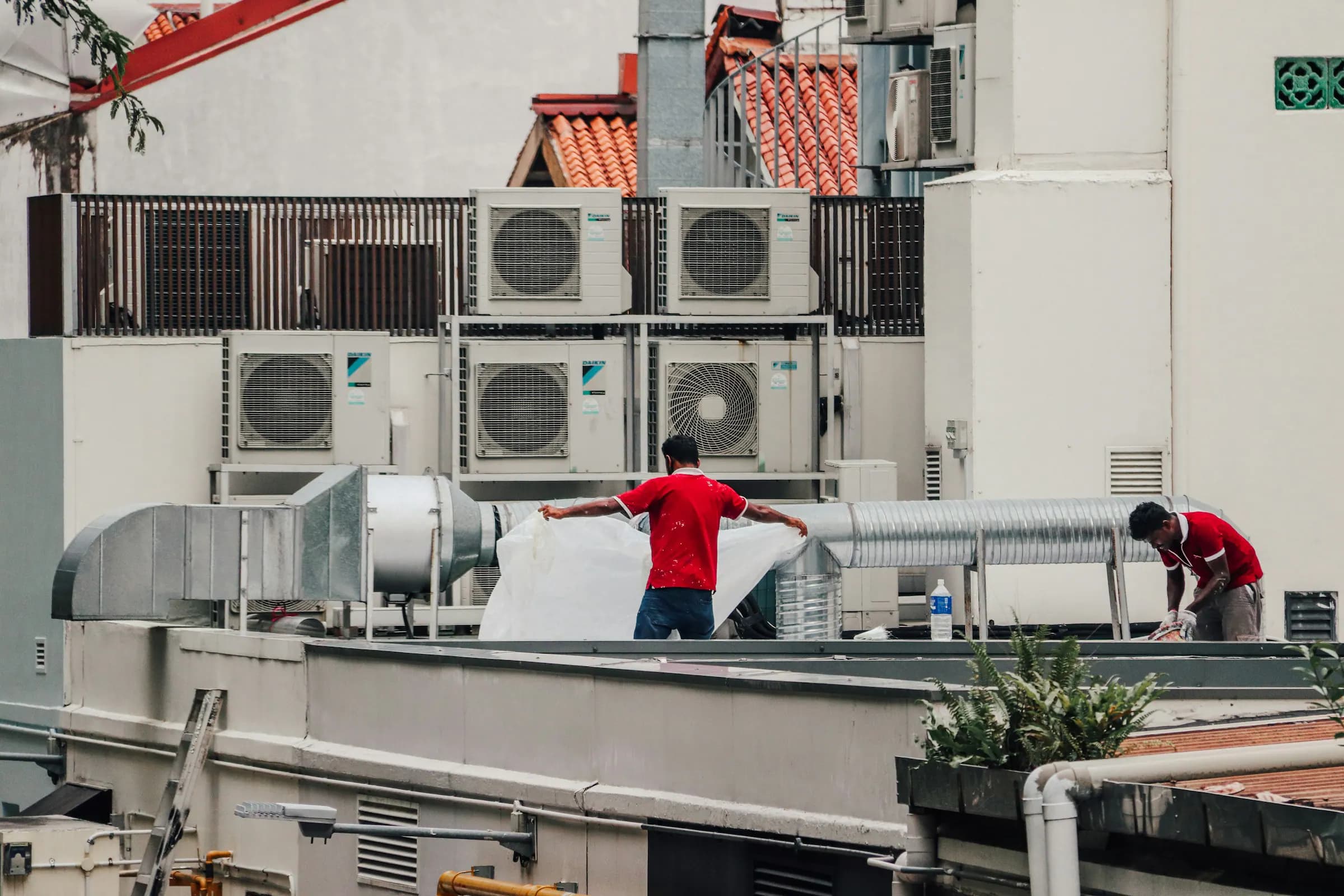
A VRF system is only as good as its piping, brazing and commissioning. We pressure-test and vacuum the lines before charging, and record the refrigerant charge for the full pipe length. After handover, routine checks keep it efficient: filter cleaning, drain line flushing, refrigerant level checks, fan motor lubrication, and a review of controller schedules when occupancy changes.
How it works
Where we use it



Available in Mumbai and nearby
Frequently asked questions
01What is the difference between VRV and VRF?
There is no technical difference. VRF, variable refrigerant flow, is the general name. VRV is the trademark Daikin uses for its VRF systems. Blue Star, Mitsubishi Heavy Industries and Samsung sell the same type of system under their own names.
02How much does a VRF system cost for an office in Mumbai?
It depends on the tonnage, number and type of indoor units, piping length and the brand. We do not quote a figure without seeing the site. Book a free site visit and we will send a written proposal after the heat-load calculation.
03Is VRF suitable for a home?
Yes, for larger flats, duplexes and bungalows where several rooms need cooling. One outdoor unit replaces a row of split outdoor units on the facade, and each room keeps its own control.
04Can you add indoor units to an existing VRF system later?
Often yes, if the outdoor unit has spare capacity and the piping can be extended. We check the existing system and its connection ratio before recommending it.
05How often should a VRF system be serviced?
Filters need cleaning regularly, more often in dusty or high-use areas. A full service with refrigerant, drain and control checks should be done at planned intervals through the year, which is easiest to manage under an AMC.
Next service
HVAC Design & Contracting.

Get a free quote
Tell us about your site.
Share the space, the tonnage if you know it, and your timeline. An engineer will call you back, visit if needed, and send a clear quote with equipment options.