

When planning a factory, warehouse, or manufacturing facility, one of the biggest investments you’ll face is the HVAC system. Industrial HVAC isn’t just about comfort—it directly impacts productivity, equipment performance, and energy efficiency.
So, how much does industrial HVAC cost per square foot in India? The answer depends on several factors, but this guide breaks down realistic pricing, cost drivers, and how to budget smartly in 2026.
Average Industrial HVAC Cost per Square Foot in India
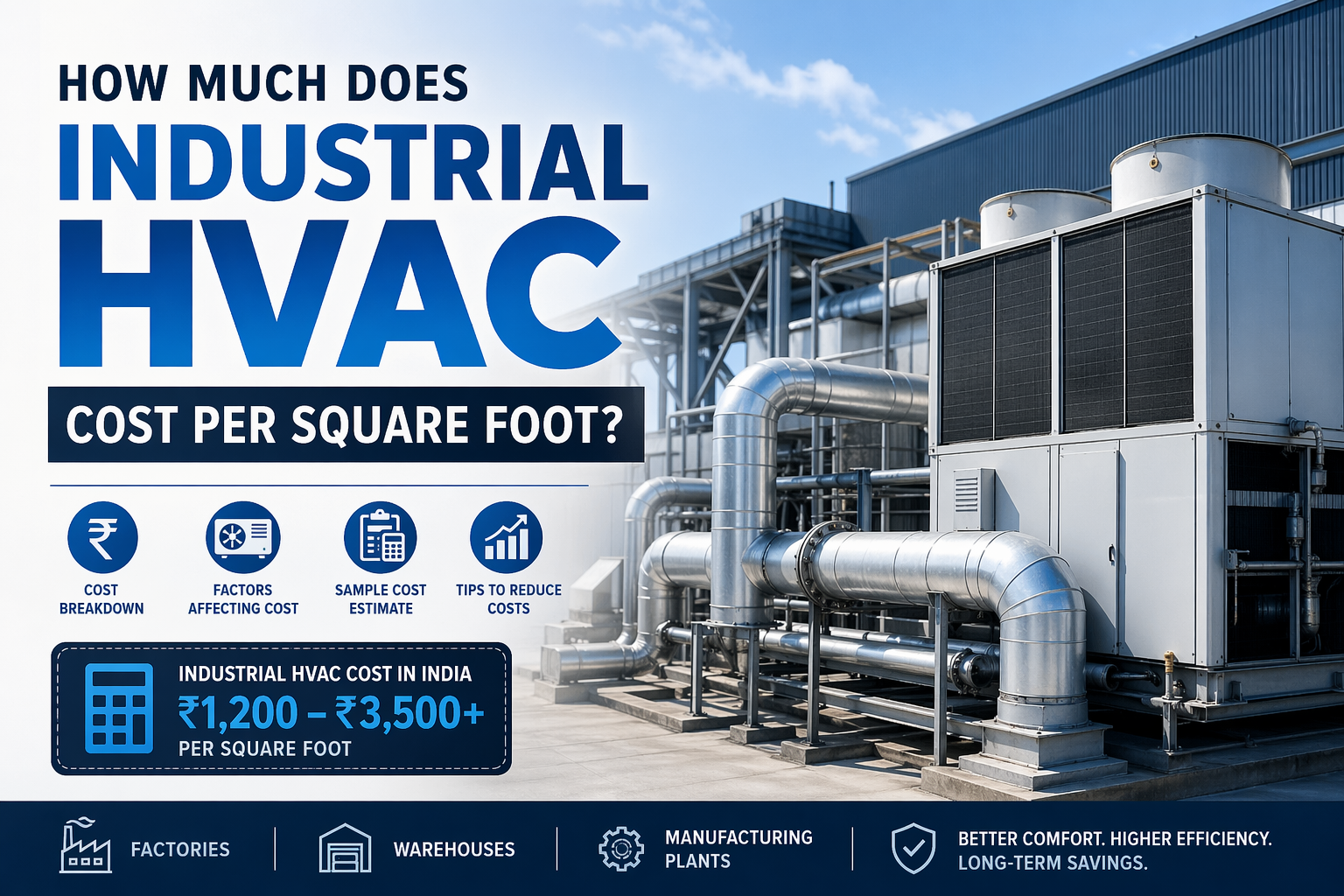
In India, the average industrial HVAC installation cost typically ranges between ₹1,200 to ₹3,500 per square foot.
This wide range exists because industrial HVAC systems are highly customized. A simple warehouse cooling setup will cost far less than a high-tech pharmaceutical plant requiring strict temperature and humidity control.
Quick Cost Breakdown
- Basic systems: ₹1,200 – ₹1,800 per sq ft
- Mid-range systems: ₹1,800 – ₹2,800 per sq ft
- Advanced/complex systems: ₹2,800 – ₹3,500+ per sq ft
For context, even constructing an industrial building in India can cost ₹900–₹1,500 per sq ft, meaning HVAC alone can represent a significant portion of total project cost.
What Does “Cost per Square Foot” Include?
When contractors quote HVAC costs per square foot, they usually include:
1. Equipment Costs
- Air handling units (AHUs)
- Chillers or packaged units
- Cooling towers
- Compressors and condensers
For example, a 10-ton commercial HVAC unit can cost ₹3 lakh or more depending on efficiency and brand.
2. Ducting and Distribution
- Sheet metal ductwork
- Insulation materials
- Air diffusers and vents
Ducting can significantly increase costs, especially in large industrial spaces with complex layouts.
3. Installation and Labor
- System design and engineering
- Installation workforce
- Testing and commissioning
Labor costs vary by city and project complexity.
4. Controls and Automation
Modern industrial HVAC systems often include:
- Smart thermostats
- Building Management Systems (BMS)
- IoT-based monitoring
These features increase upfront cost but reduce long-term energy expenses.
Key Factors That Affect Industrial HVAC Cost
1. Facility Size and Layout
The larger the building, the higher the cost—but economies of scale may reduce the per-square-foot price slightly.
However, complex layouts with multiple zones increase costs due to additional ducting and controls.
2. Type of HVAC System
Different systems come with different price tags:
- Central HVAC systems: High initial cost but ideal for large facilities
- VRF/VRV systems: Flexible but more expensive
- Packaged units: Cost-effective for medium-scale industries
In India, installation costs can range from ₹40,000 to ₹1,20,000 per ton depending on system type.
3. Industry Requirements
Some industries require specialized HVAC:
- Pharmaceuticals: Strict temperature and humidity control
- Food processing: Hygiene and air quality compliance
- Data centers: Precision cooling
These increase costs due to advanced filtration and control systems.
4. Energy Efficiency Standards
Energy-efficient HVAC systems cost more upfront but reduce operational expenses.
Studies show optimized HVAC systems can reduce energy usage by up to 30%, making them a smart long-term investment.
5. Location and Climate
In hotter regions of India, HVAC systems need higher capacity, increasing both installation and operational costs.
Additionally, urban areas may have higher labor and logistics costs.
Cost Comparison: Industrial vs Commercial HVAC
Industrial HVAC systems are generally more expensive than standard commercial systems due to their scale and complexity.
- Commercial HVAC: $15–$50 per sq ft globally (~₹1,200–₹4,000+)
- Industrial HVAC: Often at the higher end due to customization
This aligns with Indian pricing trends, where industrial facilities demand more robust systems.
Hidden Costs You Shouldn’t Ignore
Many businesses underestimate the true cost of industrial HVAC. Here are additional expenses to plan for:
1. Electrical Infrastructure
Heavy-duty HVAC systems require:
- Power upgrades
- Backup generators
Running HVAC on diesel generators can be extremely expensive, costing ₹180–₹220 per kWh.
2. Maintenance Costs
- Annual Maintenance Contracts (AMC)
- Filter replacements
- Repairs and servicing
Regular maintenance ensures system longevity and efficiency.
3. Operational Costs
Energy consumption is the biggest long-term expense. Investing in efficient systems can significantly reduce electricity bills.
Sample Cost Estimate
Let’s say you’re building a 20,000 sq ft industrial facility:
- Basic HVAC system: ₹2.4 crore (₹1,200/sq ft)
- Mid-range system: ₹4–5.6 crore
- High-end system: ₹7 crore+
This example highlights why HVAC planning should be part of your initial budgeting—not an afterthought.
How to Reduce Industrial HVAC Costs
1. Choose the Right System
Avoid overdesigning your HVAC system. Match the system to your actual operational needs.
2. Optimize Layout
Efficient duct design reduces material and installation costs.
3. Invest in Energy Efficiency
Higher upfront cost = lower long-term bills.
4. Work with Experts
Professional HVAC consultants ensure:
- Accurate load calculations
- Efficient system design
- Cost optimization
5. Plan for Scalability
Choose systems that can expand as your business grows, avoiding expensive upgrades later.
Why Industrial HVAC Is Worth the Investment
While the cost may seem high, industrial HVAC systems provide:
- Better employee productivity
- Equipment protection
- Regulatory compliance
- Energy savings over time
With India’s HVAC market expected to grow rapidly due to rising demand and climate needs, investing in the right system today ensures long-term benefits.
Final Thoughts
Industrial HVAC cost per square foot in India typically ranges from ₹1,200 to ₹3,500, depending on system complexity, efficiency, and industry requirements.
The key to managing costs is not choosing the cheapest option—but selecting the right system for your facility. A well-designed HVAC system pays for itself through energy savings, reliability, and performance.
If you’re planning an industrial project, partnering with an experienced provider like Coolixa can help you get a customized solution that balances cost, efficiency, and long-term value.