

Installing an HVAC system with proper ductwork is one of the most important investments in any residential, commercial, or industrial building. It ensures consistent airflow, temperature control, and energy efficiency. However, many property owners struggle to estimate the actual cost involved.
So, how much does it cost to install HVAC and ductwork in India? The answer varies widely depending on building size, system type, and project complexity. In this guide, we’ll break down the costs, factors, and smart ways to budget your HVAC installation in 2026.
Average Cost of HVAC Installation with Ductwork in India
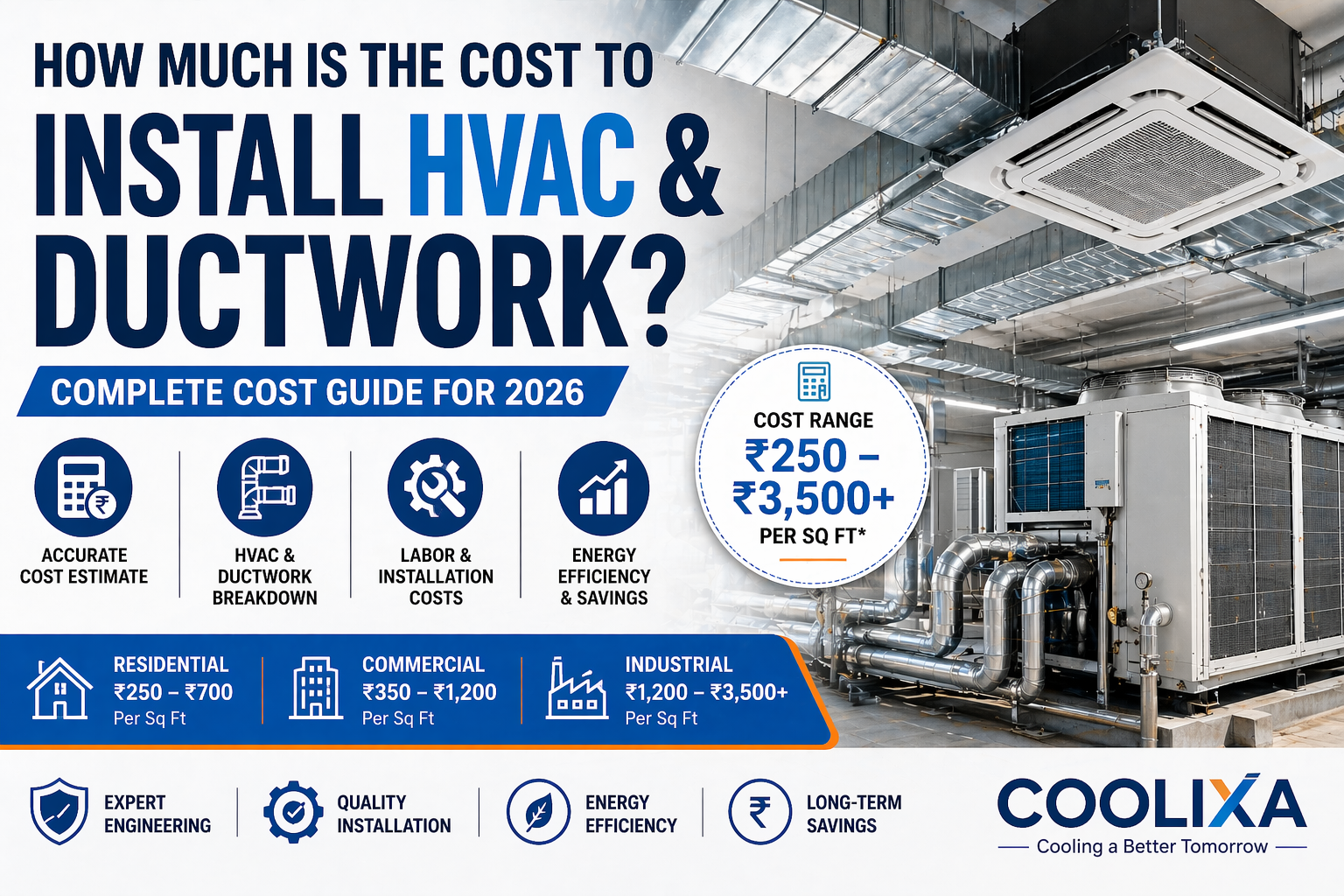
In India, the combined cost of HVAC installation and ductwork typically ranges between:
- Residential projects: ₹250 to ₹700 per sq ft
- Commercial spaces: ₹350 to ₹1,200 per sq ft
- Industrial facilities: ₹1,200 to ₹3,500 per sq ft
These estimates include equipment, ducting materials, labor, and basic controls. Premium systems or complex layouts can push costs even higher.
Cost Breakdown: HVAC vs Ductwork
Understanding how costs are divided helps you plan more accurately.
1. HVAC Equipment Cost (40–60%)
This includes:
- Air conditioners (split, ducted, or central systems)
- Air Handling Units (AHUs)
- Chillers and cooling towers
- Compressors and condensers
For example:
- Split AC unit: ₹30,000 – ₹80,000
- Central HVAC system: ₹5 lakh to ₹50 lakh+ depending on size
2. Ductwork Cost (20–35%)
Ductwork is essential for distributing conditioned air across the building.
Costs depend on:
- Duct material (GI sheet, aluminum, or pre-insulated panels)
- Insulation quality
- Layout complexity
On average, ductwork costs range from ₹150 to ₹400 per sq ft.
3. Installation & Labor (10–20%)
Installation includes:
- System design
- Duct fabrication and installation
- Equipment setup
- Testing and commissioning
Labor costs vary by city, with metro areas typically more expensive.
4. Controls & Accessories (5–10%)
- Thermostats
- Sensors
- Smart automation systems
- Diffusers and vents
Advanced systems with IoT or BMS integration cost more but improve efficiency.
Factors That Affect HVAC and Ductwork Installation Cost
1. Building Size and Layout
Larger spaces require more ducting and higher-capacity systems, increasing total cost. However, the per-square-foot cost may decrease slightly due to economies of scale.
Complex layouts with multiple rooms or zones increase ductwork expenses.
2. Type of HVAC System
Different HVAC systems have different cost structures:
- Split systems: Cheapest, minimal ductwork required
- Ducted systems: Higher cost due to duct installation
- Central HVAC systems: Expensive but ideal for large buildings
- VRF/VRV systems: Premium option with high efficiency
Choosing the right system directly impacts your budget.
3. Duct Design and Material
Ductwork design plays a major role in cost:
- Straightforward layouts are cheaper
- Complex designs with bends and branches cost more
- Insulated ducts increase upfront cost but improve efficiency
Poor duct design can lead to energy loss and higher operational costs.
4. Energy Efficiency Requirements
Energy-efficient systems cost more initially but reduce electricity bills over time.
High-efficiency systems can cut energy consumption by up to 30%, making them a smart long-term investment.
5. Location and Climate
Hot climates require more powerful HVAC systems, increasing both installation and operational costs.
Labor and material costs also vary depending on the city.
Sample Cost Estimates
Example 1: 1,500 sq ft Home
- Split AC + minimal ducting: ₹3–5 lakh
- Ducted HVAC system: ₹6–10 lakh
- Premium system with automation: ₹10–15 lakh
Example 2: 5,000 sq ft Office
- Basic HVAC system: ₹18–25 lakh
- Mid-range system: ₹30–50 lakh
- High-end system: ₹60 lakh+
Example 3: 20,000 sq ft Industrial Facility
- Basic HVAC + ductwork: ₹2.5–3 crore
- Mid-range system: ₹4–6 crore
- Advanced system: ₹7 crore+
Hidden Costs to Watch Out For
1. Electrical Upgrades
HVAC systems require significant power, which may involve:
- Electrical panel upgrades
- Backup generators
2. Maintenance Costs
Annual maintenance typically costs 5–10% of the system value.
3. Energy Consumption
Electricity bills are the largest long-term expense. Efficient systems can save significant money over time.
4. Retrofitting Challenges
If HVAC installation is not planned early, modifications can increase costs.
Tips to Reduce HVAC and Ductwork Costs
1. Plan During Construction
Installing HVAC during the construction phase is cheaper than retrofitting later.
2. Optimize Duct Design
Efficient duct layouts reduce material and installation costs.
3. Choose the Right System Size
Oversized systems waste energy, while undersized systems struggle to perform.
4. Invest in Insulation
Better insulation reduces cooling load and HVAC capacity requirements.
5. Work with Professionals
Experienced HVAC providers like Coolixa ensure:
- Accurate load calculations
- Efficient system design
- Cost optimization
Why Proper HVAC and Ductwork Matter
A well-designed HVAC system with proper ductwork offers:
- Consistent temperature control
- Improved indoor air quality
- Lower energy bills
- Longer equipment lifespan
Poor installation can lead to uneven cooling, energy loss, and frequent breakdowns.
Future Trends in HVAC Installation
The HVAC industry is evolving rapidly, with trends such as:
- Smart HVAC systems with automation
- Energy-efficient and eco-friendly solutions
- IoT-enabled monitoring
- Modular and scalable systems
These innovations improve performance but may increase initial costs.
Final Thoughts
The cost to install HVAC and ductwork in India typically ranges from ₹250 to ₹3,500 per square foot, depending on building type, system complexity, and efficiency requirements.
While the upfront investment may seem high, a well-designed system delivers long-term savings, comfort, and reliability.
If you’re planning a new project or upgrading your existing system, working with an experienced provider like Coolixa ensures you get the best value for your investment.