

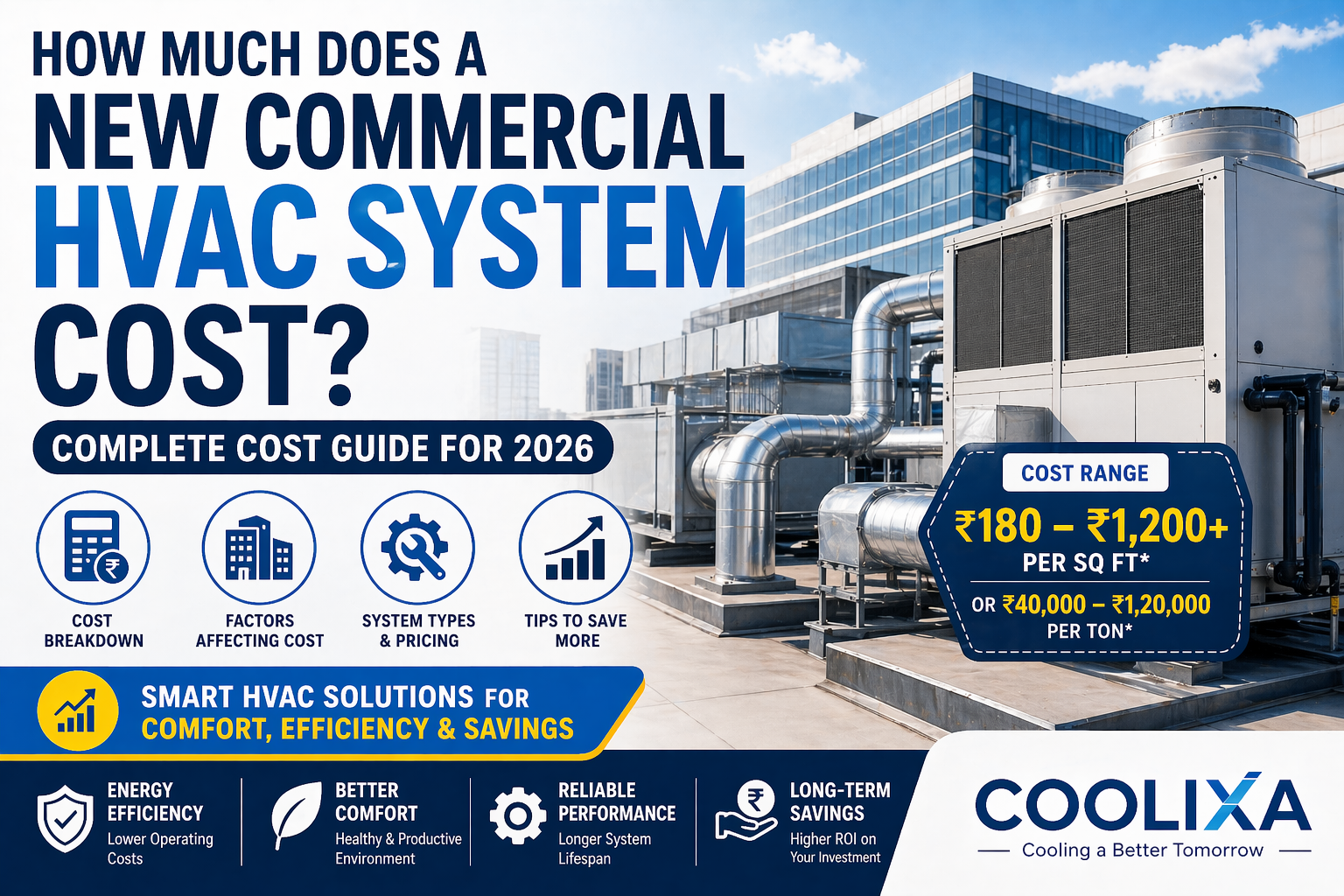
Installing a new commercial HVAC system is a major investment for any business. Whether you’re setting up an office, retail store, hospital, or industrial unit, your HVAC system directly affects comfort, energy efficiency, and long-term operating costs.
So, how much does a new commercial HVAC system cost in India? The answer varies depending on several factors, including building size, system type, and efficiency requirements. In this guide, we’ll break down the costs, influencing factors, and smart budgeting tips for 2026.
Average Commercial HVAC Cost in India
In India, the cost of a new commercial HVAC system typically falls within the following range:
- ₹180 to ₹500 per sq ft for standard installations
- ₹500 to ₹1,200+ per sq ft for advanced or high-efficiency systems
Alternatively, HVAC systems are often priced per ton (cooling capacity):
- ₹40,000 to ₹1,20,000 per ton depending on system type and brand
For example:
- A small office (2,000 sq ft): ₹4–10 lakh
- A mid-sized commercial space (10,000 sq ft): ₹25–60 lakh
- Large commercial building (50,000+ sq ft): ₹1.5 crore to ₹6 crore+
What Does the Cost Include?
Understanding what’s included in HVAC pricing helps you plan your budget more accurately.
1. Equipment Costs (40–60%)
This includes:
- Air conditioning units (split, ducted, or packaged systems)
- Air Handling Units (AHUs)
- Chillers and cooling towers
- Compressors and condensers
High-capacity chillers for large commercial buildings can cost significantly more than standard AC units.
2. Ductwork and Air Distribution (20–30%)
Ductwork ensures even air distribution throughout the building.
Costs depend on:
- Layout complexity
- Duct material and insulation
- Number of zones
Complex layouts increase both material and labor costs.
3. Installation and Labor (10–20%)
Installation includes:
- System design and load calculations
- Equipment installation
- Duct fabrication
- Testing and commissioning
Labor costs vary based on project size and location.
4. Controls and Automation (5–10%)
Modern commercial HVAC systems include:
- Smart thermostats
- Building Management Systems (BMS)
- Sensors and automation
These systems improve efficiency but add to initial costs.
Key Factors That Affect Commercial HVAC Costs
1. Building Size and Layout
Larger buildings require more capacity and extensive ductwork, increasing total costs. However, per-square-foot costs may decrease due to scale.
Complex designs with multiple zones or floors require advanced systems.
2. Type of HVAC System
Different HVAC systems come with varying costs:
- Split systems: Affordable but limited for large spaces
- Packaged units: Cost-effective for medium-sized buildings
- Central HVAC systems: High upfront cost but ideal for large buildings
- VRF/VRV systems: Flexible and energy-efficient but premium-priced
Choosing the right system is crucial for cost optimization.
3. Energy Efficiency and Ratings
Energy-efficient HVAC systems cost more upfront but significantly reduce electricity bills.
High-efficiency systems can lower energy consumption by up to 30%, making them a smart long-term investment.
4. Industry Requirements
Different industries have different HVAC needs:
- Offices: Comfort and ventilation
- Hospitals: Air filtration and hygiene
- Retail: Consistent cooling
- Data centers: Precision cooling
Specialized requirements increase costs due to advanced technology.
5. Location and Climate
Hot climates require more powerful HVAC systems, increasing both installation and operational costs.
Additionally, metro cities often have higher labor and material costs.
Cost Breakdown by System Type
1. Split HVAC Systems
- Cost: ₹30,000 – ₹80,000 per unit
- Best for: Small offices and retail stores
2. Packaged HVAC Units
- Cost: ₹5 lakh – ₹20 lakh
- Best for: Medium commercial spaces
3. Central HVAC Systems
- Cost: ₹20 lakh – ₹2 crore+
- Best for: Large buildings and malls
4. VRF/VRV Systems
- Cost: ₹1,50,000 – ₹3,00,000 per ton
- Best for: Energy-efficient modern buildings
Hidden Costs to Consider
1. Electrical Infrastructure
Commercial HVAC systems require strong electrical support, including:
- Power upgrades
- Backup generators
2. Maintenance Costs
Annual maintenance typically costs 5–10% of the system value.
3. Energy Costs
Electricity bills are the largest long-term expense. Efficient systems reduce operational costs significantly.
4. Retrofitting Adjustments
If HVAC is not planned during construction, modifications can increase costs.
Tips to Reduce Commercial HVAC Costs
1. Plan Early
Integrate HVAC design during the construction phase to avoid costly changes later.
2. Choose the Right System
Avoid over- or under-sizing your HVAC system. Accurate load calculations are essential.
3. Invest in Energy Efficiency
Although more expensive upfront, energy-efficient systems reduce long-term costs.
4. Optimize Building Design
Proper insulation, shading, and ventilation reduce HVAC load.
5. Work with Experts
Professional HVAC providers like Coolixa ensure:
- Accurate system design
- Efficient installation
- Cost optimization
Why Commercial HVAC Is a Smart Investment
A well-designed HVAC system offers:
- Improved employee productivity
- Better customer experience
- Energy savings
- Compliance with safety standards
It also increases the overall value of your property.
Future Trends in Commercial HVAC
The HVAC industry in India is evolving with:
- Smart HVAC systems with IoT integration
- Green building solutions
- Solar-powered HVAC systems
- AI-based energy optimization
These technologies improve efficiency but may increase initial costs.
Final Thoughts
The cost of a new commercial HVAC system in India typically ranges from ₹180 to ₹1,200+ per square foot, depending on system type, efficiency, and building requirements.
While the upfront investment may seem high, a well-designed HVAC system delivers long-term value through energy savings, reliability, and improved comfort.
If you’re planning a commercial project, partnering with an experienced provider like Coolixa ensures you get a customized HVAC solution that balances cost and performance.